
From March 2023, NAATI has introduced a digital identity system for certified translators. Translators now have the option to use the NAATI physical stamp, NAATI ID card, and NAATI Digital Stamp.
What is a NAATI Stamp?
A NAATI stamp allows a translator to verify their identity. Once a translator obtains NAATI certification—or after their regular recertification—they are eligible to use a NAATI stamp.
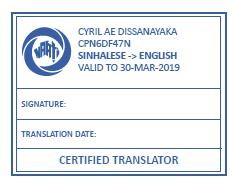
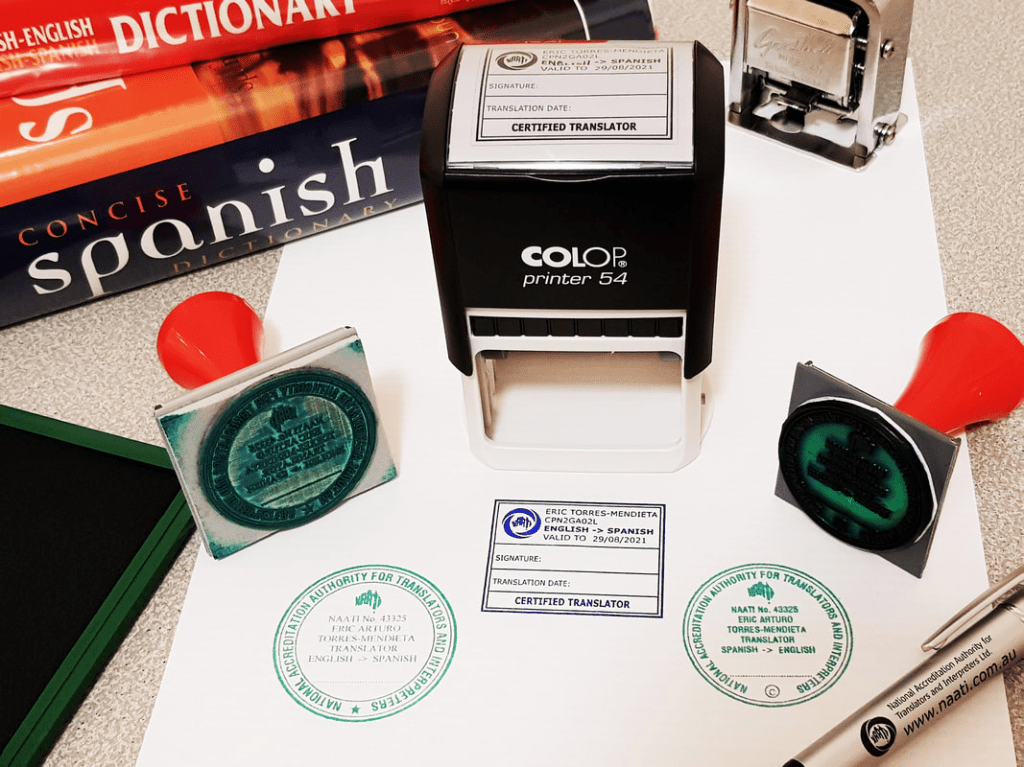
NAATI Physical Stamp
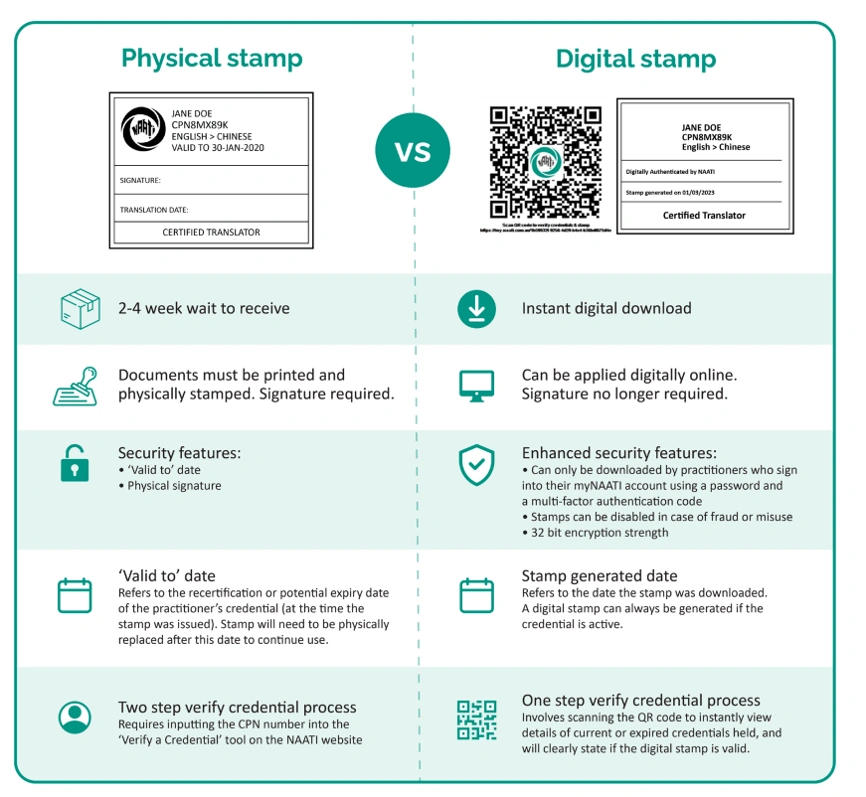
When a NAATI-certified translator is granted their qualification or successfully completes recertification, NAATI mails out a new physical stamp. This stamp displays a “Valid to” date, which corresponds to the translator’s recertification expiry date at the time the stamp is issued. Note, however, that this date does not indicate that NAATI-certified translations become invalid after that date; the translation document should show the date of translation completion. In most cases, these translations remain permanently valid.
You May Also Like
What is the Validity Period for NAATI (NATTI) Certified Translations?
Introduction to the NAATI Digital Stamp
All NAATI-certified translators can use a Digital Stamp, which is designed similarly to the traditional NAATI Physical Stamp but offers enhanced security features.
Features of the NAATI Digital Stamp:
- Unique QR Code Verification: Each digital stamp contains a unique QR code. Clients can verify the translator’s NAATI credentials by scanning the QR code or by entering the 32-character code displayed below the QR code in a web browser.
- Daily Updates: A new QR code is generated daily. NAATI-certified translators must download the latest digital stamp on the day of translation to ensure its validity.
- Translation Date Marking: The text on the right side of the digital stamp—“Stamp generated on … (Stamp generated on xxxx)”—replaces the “Translation Date” on the physical stamp, ensuring that the document’s date is traceable.
- Qualification Validity Check: When the QR code is scanned, the system displays the translator’s current or expired qualification information and clearly indicates whether the digital stamp is valid.
- If the translator’s NAATI certification is still valid, the QR code will display that the digital stamp is valid.
- If the translator’s NAATI certification has expired, but the digital stamp was generated while the certification was valid, the QR code will still display that the digital stamp is valid—though it will note that the translator’s current qualification has expired.
- If the QR code has been disabled by NAATI due to fraud or misuse, or if it is part of a forged digital stamp, the system will return a message stating “Digital Stamp Invalid”.
The NAATI Digital Stamp significantly enhances the security and verifiability of translation documents, ensuring that clients and relevant agencies can easily confirm the translator’s certification status.

QR Code Security
1. Uniqueness and Security
Every QR code on a NAATI Digital Stamp is unique. In the event of fraud or misuse, NAATI can disable that specific QR code without affecting other translation documents produced by the translator.
2. Obtaining the Digital Stamp
- NAATI-certified translators must log in to their myNAATI account using a password and multi-factor authentication (MFA) to download the latest digital stamp.
- Note: The QR code does not display the qualification expiry date; however, a digital stamp can only be generated if the translator’s qualification is currently valid, providing an extra layer of security for document authentication.
3. Structure and Verification of the Digital Stamp
- The download process for the digital stamp is conducted in two steps to ensure security.
- The signature field on the digital stamp has been replaced with “Digitally Authenticated by NAATI”, which can be accepted without a physical signature.
- Client Verification: When the QR code is scanned, the detailed information returned should match the translator’s qualification, name, photo, and translation document details to ensure the authenticity of the translation.
This electronic authentication mechanism further enhances the credibility and security of translation documents, allowing clients and agencies to conveniently verify the identity of NAATI-certified translators and the compliance of their translations.
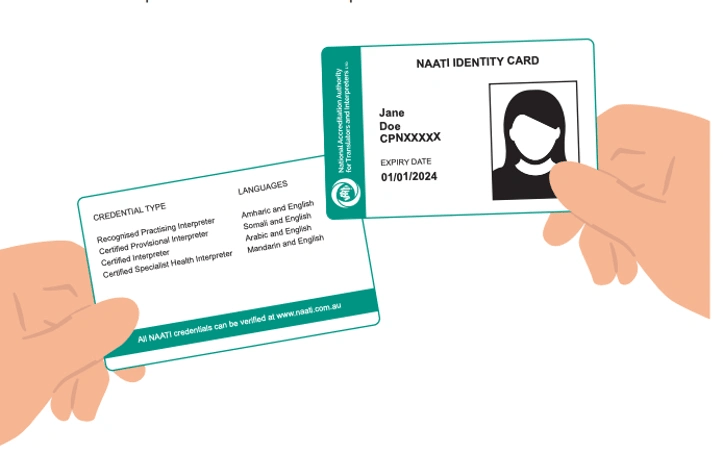
NAATI Physical ID Card (mainly for interpreting jobs)
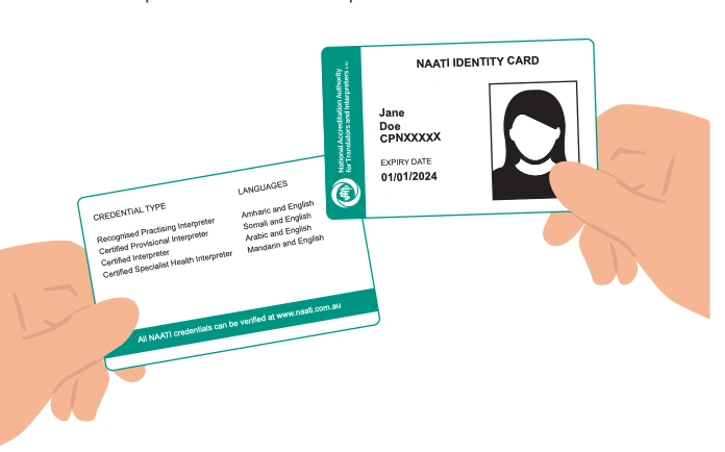
The NAATI Translator Physical ID Card is the same size as a standard bank card. The front of the card displays the translator’s photo, their unique translator number, and the validity period, while the back shows their qualification and language information. Note that only NAATI-certified translators are issued a NAATI Translator ID Card.
After obtaining their qualification or completing recertification, a NAATI-certified translator receives a NAATI Translator ID Card. To verify the authenticity of a translator’s ID card, you can enter the translator’s number into the “Translator Verification Tool” on the NAATI website at https://www.naati.com.au/. This tool helps clients confirm the translator’s credentials and identity.
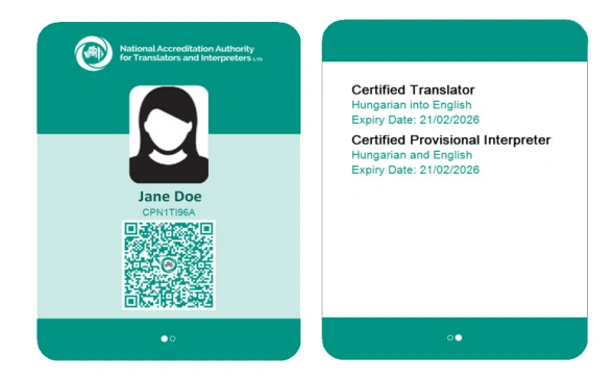
NAATI Digital ID Card (mainly for interpreting jobs)
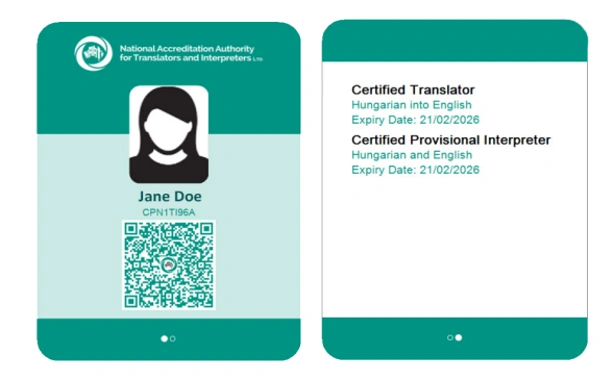
The Digital ID Card is available to all NAATI-certified translators with a current valid qualification. Unlike the physical ID card, the digital ID card includes a scannable QR code. When scanned, a second screen displays the translator’s current qualification information. Each digital ID card has a unique QR code that allows clients to verify the translator’s credentials.
When the QR code is scanned, the system displays the detailed qualification information of the translator—whether current or expired—and clearly indicates whether the digital ID card is valid. If the QR code has been disabled due to fraud or misuse, or if it is forged, the returned information will indicate “Digital Stamp: Invalid.” This feature provides clients with an added level of security, ensuring the authenticity and reliability of the translator’s credentials.
Verifying Qualifications
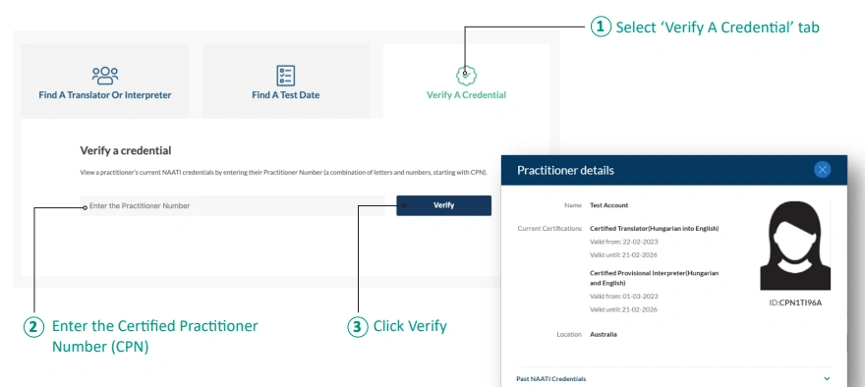
Clients can verify the credentials of a NAATI-certified translator and view their current or expired qualification details using the following methods:
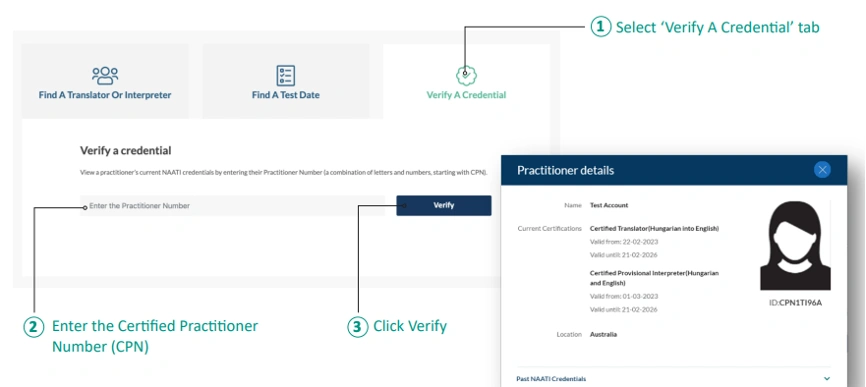
- Using the “Qualification Verification” Tool on the NAATI Website Enter the translator’s CPN (Certified Practitioner Number) – a unique identifier – in the qualification verification tool on the NAATI website. Visit: https://www.naati.com.au/
- Scanning the QR Code on the NAATI Digital Stamp or ID Card Scan the QR code on the NAATI digital stamp or electronic ID card to directly access the translator’s credential information.
- Entering the 32-Character Unique Code Below the Digital Stamp’s QR Code Input the 32-character unique code found below the QR code into a web browser to view the related credential information.
Translator Certification Number
Every NAATI-certified translator is assigned a unique Translator Certification Number (also known as the Certified Practitioner Number, or CPN). This number consists of 9 characters, always starting with “CPN”, followed by one digit, two letters, two digits, and one letter (for example, CPN7MF89K).
Frequently Asked Questions
For more information on NAATI translation certification, please visit NAATI’s official website: https://naati.au/practitioner-id
What is the Translation Date?
The translation date is the date on which the translator stamps and signs the document upon completion. If the translation date listed on the stamp falls within the validity period of the translator’s qualification (i.e. before the “Valid to” date), then the translation document is considered an official and valid NAATI-certified translation.
Are the QR Codes Secure?
The randomly generated code embedded within the digital stamp has an extremely large number of possible combinations, making it nearly impossible to guess a valid code. The digital ID card uses the same 32-bit encryption protection as the digital stamp, and only NAATI-certified translators with multi-factor authentication enabled on their MyNAATI account can access it.
Verifying NAATI Accreditation & Certification
You might encounter NAATI certifications (i.e. NAATI certification stamps or interpreter ID cards) without an expiry date. These credentials were issued under the old NAATI Accreditation system (from 1977 to 2017). The translator numbers under the old NAATI Accreditation system consist only of digits (e.g. 12453), whereas the current NAATI Certification numbers start with “CPN” (a mix of letters and numbers). If you wish to verify a translator’s certification information, please contact NAATI directly at info@naati.com.au. For more information about identity verification under the certification system, please visit:
You May Also Like
What is a NAATI-Certified Translation? What are the Differences Between the Stamps?
What is a NAATI Digital Stamp?
Which NAATI-Certified Translation Do You Need? Understanding NAATI Level 3 Certification


 BL Translations