

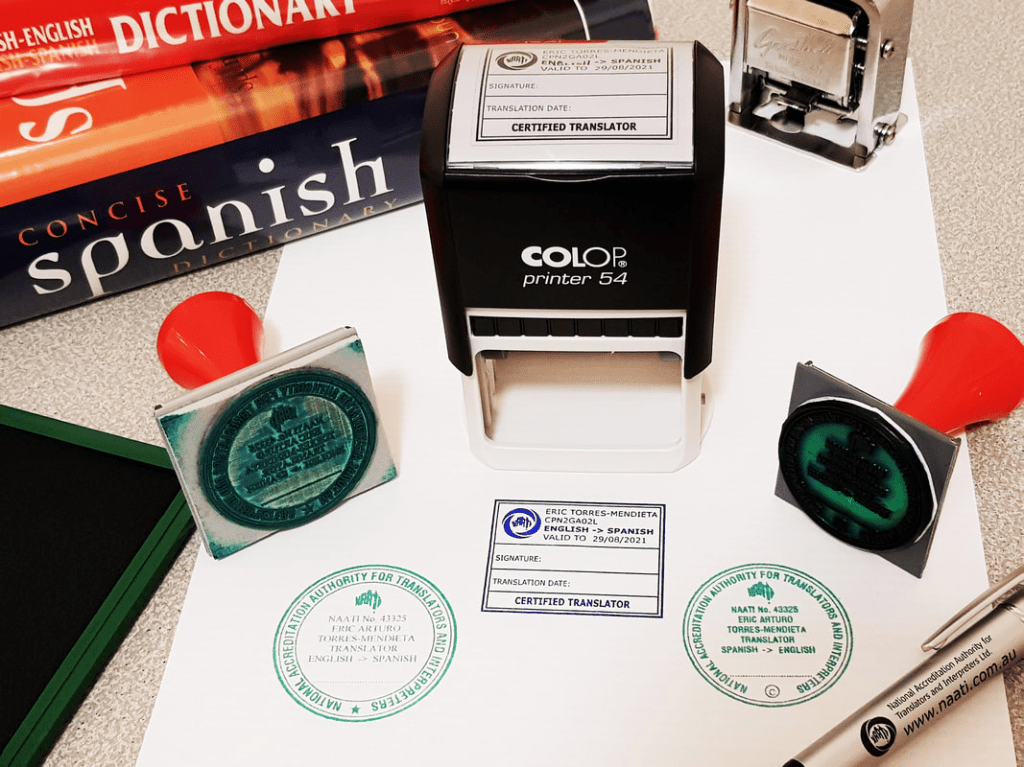
A NAATI Digital Stamp is the official mark used by NAATI-certified translators to authenticate electronic documents. Unlike traditional physical stamps, it is designed for certifying digital documents in line with the current trend towards paperless offices and online document submission.
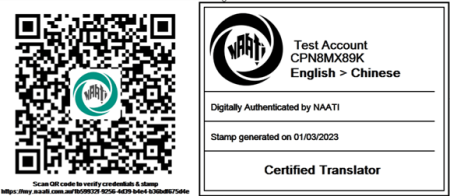
Features of the NAATI Digital Stamp
Official Certification
- Provided by NAATI and reserved for translators who currently hold NAATI certification.
- Since NAATI introduced system reforms in 2018, all certified translators are encouraged to transition into the “Recertification” system. Most government agencies now accept only translations from translators within this framework.
- For example, the Department of Foreign Affairs and Trade (DFAT) has issued an official statement accepting only translations from translators under the NAATI Certification system. Translations from translators outside this system are considered invalid. DFAT Translation Requirements
Uniqueness
- Each NAATI Digital Stamp features a unique QR code that contains authentication information such as the translator’s name, certification number, and validity period.
- It is essential to choose a reputable NAATI-certified translator to ensure the legality and validity of your translation. In recent years, some online platforms have featured fraudulent translators who may use obsolete or forged NAATI Digital Stamps.
- If scanning the QR code on the NAATI Digital Stamp reveals translation details (such as the stamp generation date, validity period, translator’s name, and photo) that do not match the actual information, it may indicate an unauthorised or illegal stamp. Always verify the translator’s certification status before engaging the translator.
- You can verify a translator’s credentials on the official NAATI website
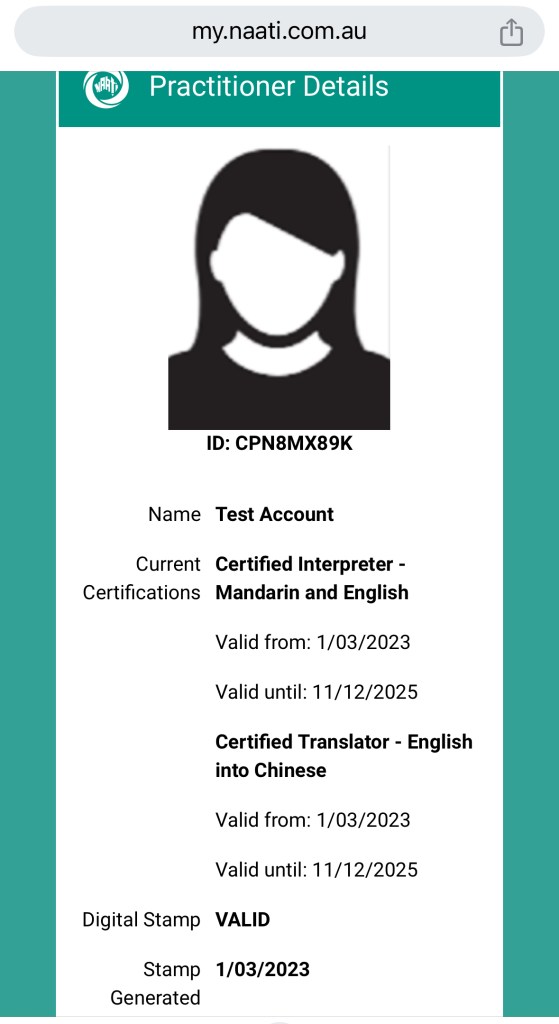
Digital Tamper-Proofing
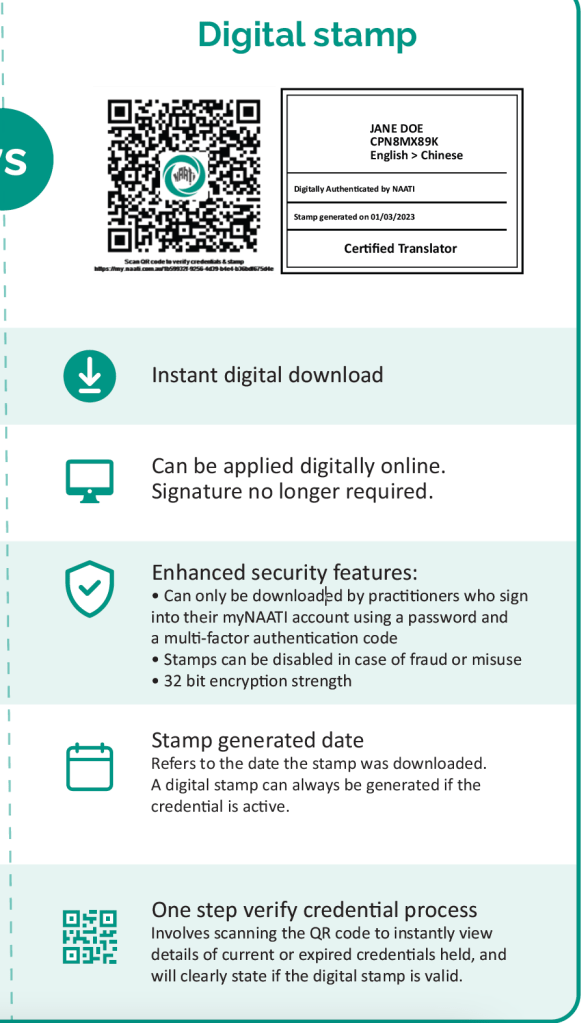
- The digital stamp is typically provided in PNG or PDF format and can be used for electronic signatures, ensuring the authenticity and integrity of the translation document.
Suitable for Online Submission
- Many Australian government agencies (such as the Department of Home Affairs, transport departments, etc.) accept electronically certified translation documents, eliminating the need for physical stamps or handwritten signatures.
- A NAATI Digital Stamp does not require the translator’s handwritten signature. Unlike traditional ink stamps, the digital stamp itself includes the translator’s identity, the stamp generation date, and its validity period, and it can be verified via its QR code. This ensures the document’s legality and traceability without the need for an additional handwritten signature.
- It is worth noting that NAATI is actively promoting the Digital Stamp. Although this transition takes time, to date, no Australian government department has required a handwritten signature on translations that feature a NAATI Digital Stamp.
You May Also Like
Which NAATI-Certified Translation Do You Need? Understanding NAATI Level 3 Certification
What is a NAATI-Certified Translation? What are the Differences Between the Stamps?
What is the Validity Period for NAATI (NATTI) Certified Translations?



 BL Translations