
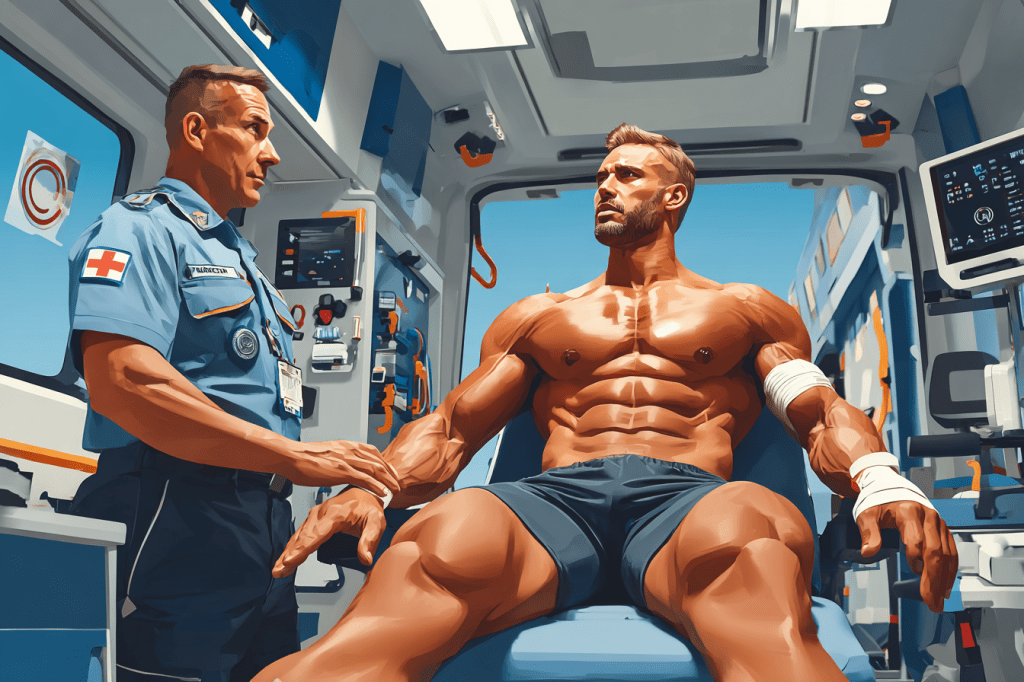
Scenario: A paramedic is assisting a man in an ambulance after he fell off his bike and may have broken his forearm. The paramedic checks the man’s pain level and offers medication to manage the discomfort.
Paramedic: Alright, you’re doing well. Just stay as still as you can. I need to check your arm again. Can you tell me exactly where it hurts the most?
Cyclist: It’s mostly the middle of my forearm, right here. Sharp pain if I try to move it or even when you touch it gently.
Paramedic: Okay, that lines up with a possible fracture. I’m going to support it with a splint and give you something for the pain, alright?
Cyclist: Yes, please. It’s really starting to throb now. I can’t focus on anything else. It feels like it’s getting worse.
Paramedic: Understood. I’ll give you a fast-acting painkiller through the IV now. You might feel a bit drowsy soon, but it’ll ease the pain significantly.
Cyclist: That sounds good. I’m fine with a little drowsiness if it helps. I’ve never broken anything before. This really caught me off guard.
Paramedic: That’s a normal reaction, especially after a fall like that. The pain can be overwhelming at first, but you’re handling it well.
Cyclist: Thanks. I just hit the curb wrong and went over the handlebars. Didn’t even have time to react or catch myself properly.
Paramedic: That kind of impact can definitely lead to fractures. The splint will help prevent more damage until the doctors can assess it fully.
Cyclist: Will I need surgery, you think? Or is it too soon to tell without an X-ray?
Paramedic: Too soon to say for sure, but not all fractures need surgery. The emergency team will check imaging and decide what’s best for recovery.
Cyclist: Alright. I just hope it’s not too bad—I’ve got work this week and can’t really afford a long recovery.
Paramedic: Totally understandable. Let’s focus on getting you comfortable for now. The hospital will guide you from there with treatment options.
Cyclist: Okay, thanks again. It really helps to hear all this explained clearly—it makes the situation less scary.
| Speaker | Total Words | Segments (25–37 words) | Segments (15–25 words) |
|---|---|---|---|
| Paramedic | 166 | 5 | 2 |
| Cyclist | 144 | 5 | 2 |
| Overall | 310 | 10 | 4 |
Disclaimer – All mock test materials provided by BL Translations have been crafted using publicly available publications from NAATI, aligning with the appropriate levels and testing components. Copyright for these mock materials is exclusively held by BL Translations. These mock materials are intended solely for educational purposes. Unauthorised commercial use or copying without proper source attribution is strictly prohibited. It is important to note that none of our materials have been recycled or modified from any similar materials owned by other individuals or institutions.
#NAATI #CCLTest #DialogueHealth #ParamedicAssessment #AmbulanceCare #EmergencyMedical #ForearmFracture #BikeAccident #PainManagement #MedicalDialogue #InterpreterPractice #TranslationResource #HealthCommunication #BLTranslations #AustralianMigration #LanguageExam




 BL Translations