

I decided to write this to give people a glimpse into the mysterious yet deeply human world of spouse migration in Australia, as a former departmental officer and a spouse migration applicant.
Under the 2025–2026 quota, the skilled migration program is capped at around 132,000 places. But spouse and child migration — which falls under the category of immediate family — works differently. These visas are demand-driven, not quota-bound, because they involve those even closer to us than parents. The government prioritises faster turnaround for them.
As Australia tightens its migration policy, the spouse or partner visa has quietly become one of the few remaining ways to build a predictable future. Unlike skilled migration — where occupation lists change constantly, reshuffled by both federal and state governments — partner migration feels more personal, emotional, and in many ways, more human.
The Simple Yet Elusive Requirement
The official requirement for partner migration sounds simple: a lasting and ongoing relationship.
But anyone who has been in a relationship knows — this is probably the most unpredictable thing in the world. Relationships are intangible; they demand patience, understanding, and yes — technique — to manage.
Notice I didn’t use the word “love.” It’s too complicated, too slippery, too easily misunderstood. What truly drives a successful relationship is something more layered than love alone.
Why Plan B Matters
If you’re setting out on your migration journey — say, as an accountant or programmer — your Plan A might be skilled migration. But if you are keen to live in Australia and are single, why don’t you consider spouse migration as your Plan B?
Well, if you’re already married or in a committed relationship, this route is probably off the table for you. In today’s climate of anti-migration sentiment, let’s be honest — unless you’re an actuary or a cardiovascular surgeon with native-level English, it’s hard to make your skilled-migration application shine in those competitive state or territory nomination rounds.
Relationships and Vehicles
Let me paint a metaphor. A relationship is like a vehicle that evolves from conventional fuel to hybrid, and eventually to full EV.
In other words:
- Stage 1: Passion
- Stage 2: Passion + Foundation
- Stage 3: Foundation only
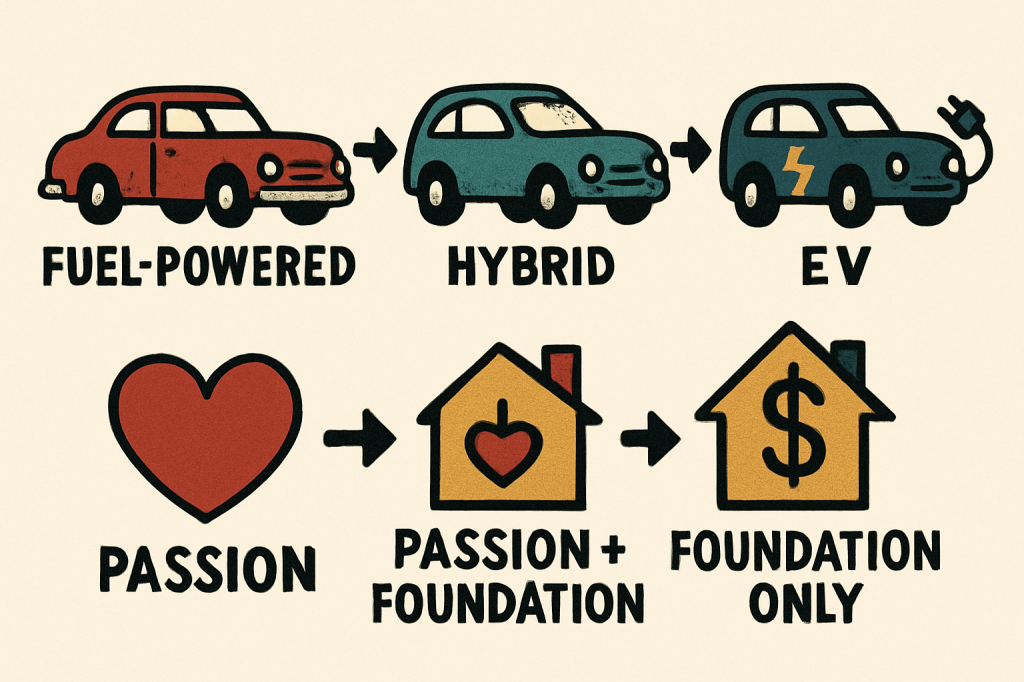
If you’re lucky, your passion still burns into your seventies — though, admittedly, not the most economical or environmentally friendly way to run! Most couples eventually channel their energy into something deeper — a foundation: mutual trust and support, emotional depth, and family (children, home, joint future).
That’s exactly how the Department approaches spouse migration assessments — they look for that foundation that follows the initial passion.
Passion, Then Proof
Passion starts it all — it’s your first ticket to a Subclass 309 (offshore) or Subclass 820 (onshore) visa.
But then, the Department watches: have you built anything solid out of that passion?
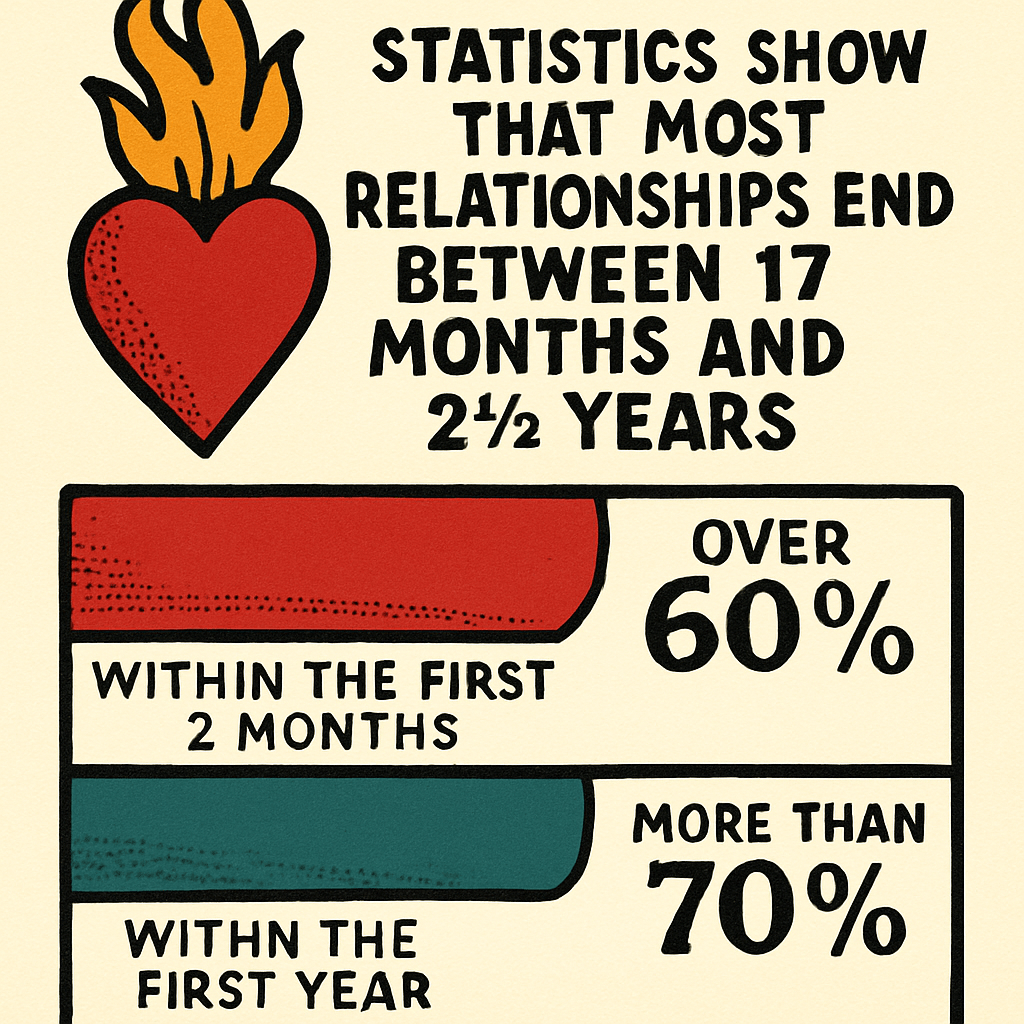
Statistics show that most relationships end between 17 months and 2.5 years. Over 60% fail within the first two months, and more than 70% within the first year.
That’s why the 309 and 820 visas require at least 12 months of relationship evidence — if you’ve reached that milestone, you’ve already survived the most dangerous phase.
How the Department Spots Fake Relationships
As a former Department employee, I can tell you — there’s no mystery behind how fake or suspicious relationships are detected. The Department uses refusal profiles, built from years of data on fraudulent applications. If your circumstances resemble these profiles, alarms go off.
Your country of origin is the first flag. Applicants from economically disadvantaged countries with historically high refusal rates are scrutinised more closely. In large countries like China or India, the Department even looks at the place of birth — residents from developed places like Beijing, Shanghai, or New Delhi generally have lower refusal rates.
Then comes how you met.
Meeting online is considered the highest risk encounter. It doesn’t automatically mean refusal, but it invites deeper investigation.

What I Saw in the UK Border Agency
When I worked with the UK Border Agency (UKBA), I sat through countless spouse migration interviews. Nearly all couples had met online and were in long-distance relationships.
The UKBA — much like Australia, the US, New Zealand, and Canada — uses a two-stage spouse migration system (provisional then permanent).
These “Five Eyes” countries even share intelligence across embassies. If you submit fake documents to one, the others will likely know — thanks to their migration integrity networks.
A Case I’ll Never Forget
One Chinese applicant met her British boyfriend while visiting the UK. After she returned to China, their long-distance relationship continued. The Department doesn’t have access to all private data — but trust me, they’ll exhaust every possible avenue.
In that case, the officer managed to access the boyfriend’s tax information in the UK to check whether he could financially support his partner. During my time at the British Embassy, we constantly verified records with Chinese authorities, banks, and local police — especially in high-risk areas like Fujian or Xinjiang- and created databases to better facilitate the verification process.
Australia’s Department of Home Affairs does the same.
My Own Partner Visa Journey
When I applied for my Subclass 309, I submitted the following evidence after 12 months of living with my partner in Beijing:
- Proof of our first encounter: we were university classmates — verified through academic transcripts.
- Financial documents: utilities under either of our names, and transaction records between our individual accounts (joint accounts aren’t always possible outside Australia). The key is regular financial interaction.
- Secondary proof: statutory declarations and statements from friends and family.
Our mandatory interview took place in Shanghai. I still remember how nervous we were, memorising each other’s relatives’ names before entering the room. The case officer skimmed through our file and said just one sentence:
“I trust your relationship is genuine. You just have to wait for the processing time.”
No grilling, no interrogation – almost disappointing. Six months later, I received the visa grant letter. My partner was pregnant at the time, and we returned to Australia soon after.
Two years later, I applied for the Subclass 100 permanent visa with minimal documentation — just a family photo, my son’s birth certificate, and a rental property contract.
It’s never about the quantity of documents — but their quality. Whether they show a real foundation.
The Risk of Faking It
Let’s be clear: the Department can conduct unannounced site visits. When I was with Home Affairs, I joined several of these in China — we never called ahead. We just showed up.
That’s why it’s critical to keep your address accurate. If officers can’t find you, they can make a decision based on whatever’s on file — and that’s rarely in your favour.
And if you think buying a relationship is easier — think again.
Even maintaining constant contact with someone you barely know is mentally and emotionally draining. I’ve seen arguments escalate into violence.

And no — domestic violence in a married or de facto relationship is not a visa pathway. Don’t let anyone tell you otherwise.
The emotional and financial toll of a DV case can be unbearable. Barristers charge between $5,000–$10,000 a day, and contested cases can drag on for days. Unless you have $100,000 to spare, don’t even think about using that route.
And those “fake partner” arrangements you’ve heard about? The going rate is from $100,000, with no guaranteed PR. You might as well take that money to a casino — at least you’ll have some fun. There’s none in this path.
Final Thoughts
So if you’re single, consider spouse migration as a Plan B — but only if you’re genuinely ready to commit and willing to settle in Australia permanently.
Because I’ve seen firsthand how fragile fake relationships are, and how easy it is for the Department to see through them.
Every lie has short legs…
A genuine relationship doesn’t rely on hundreds of staged wedding photos. It’s reflected in a shared life — a foundation built over time, where financial connection, trust, and mutual support naturally show through. That’s exactly the kind of authenticity a case officer is looking for.
#️⃣ #PartnerVisaAustralia #SpouseMigration #AustralianVisa #MigrationJourney #PartnerVisa309 #VisaSubclass820 #MigrationTips #LoveAndMigration #AustralianImmigration #HomeAffairs #RelationshipAdvice #VisaExperience #TrueStory #MigrationPathways #LifeInAustralia #ExpatLifeAustralia #FamilyMigration #VisaJourney #AustralianVisaStory



 BL Translations