
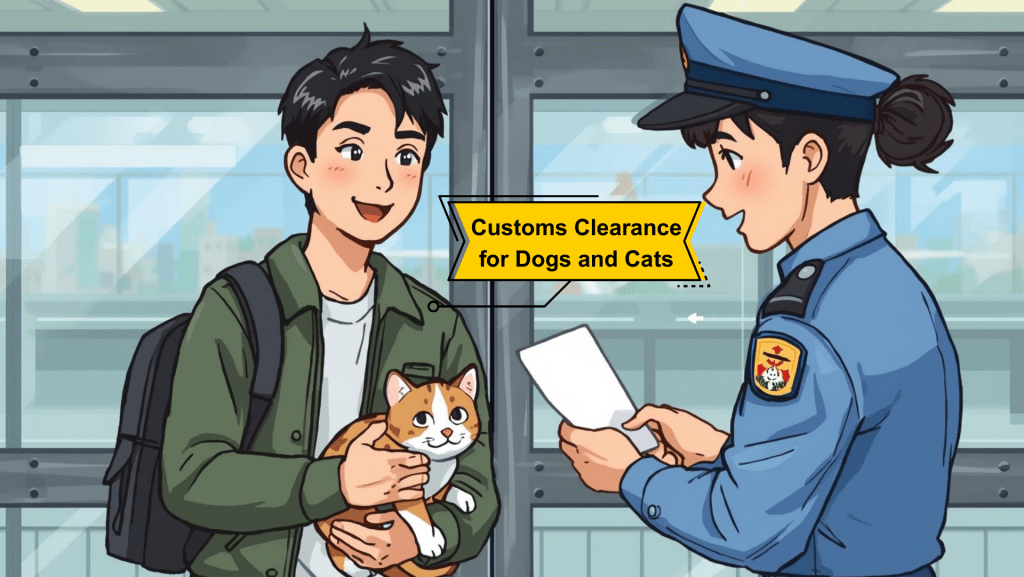
When a dog or cat leaves Australia, many owners assume that airport border officers handle the paperwork. In reality, the process is driven primarily by the Department of Agriculture, Fisheries and Forestry (DAFF), with the Australian Border Force (ABF) playing a limited customs and security role.
For destinations such as Taiwan, the documentation issued by the receiving country — particularly the import permit — becomes the central piece of evidence that enables Australian authorities to certify the export. Where those documents are not in English, certified translation (often by a NAATI-credentialed translator) becomes critical.
This article explains how the system fits together and what documents are scrutinised before a pet can legally depart Australia.
The Institutional Roles: DAFF vs Australian Border Force
DAFF — Primary Export Authority
DAFF is responsible for certifying that animals exported from Australia comply with the import requirements of the destination country. Without DAFF endorsement, airlines will not transport the animal internationally.
DAFF’s role includes:
- Reviewing import requirements issued by the receiving country
- Verifying veterinary compliance (vaccinations, tests, treatments)
- Confirming the animal’s identity via microchip
- Issing the official veterinary export certificate
- Ensuring statements in the certificate are legally accurate
In short, DAFF certifies: “This animal meets the importing country’s conditions.”
Australian Border Force — Limited Customs Role
ABF manages border security, customs compliance, and restricted exports. For ordinary domestic pets, ABF typically does not perform detailed veterinary checks.
ABF may become involved only if there are concerns such as:
- Export of protected wildlife
- Biosecurity or smuggling issues
- Missing export clearance
- Security risks
For routine pet relocation, the key approval comes from DAFF, not ABF.
Why Receiving-Country Documents Are Crucial
Australia does not impose its own universal export standards for pets. Instead, DAFF works “backwards” from the destination country’s rules.
For Taiwan, this means DAFF must examine the import conditions set by Taiwan’s animal quarantine authority (APHIA) and confirm that the Australian documentation will satisfy those conditions upon arrival.
If the receiving country’s requirements cannot be verified, DAFF cannot legally certify the export.
Core Receiving-Country Documents Examined by DAFF (Taiwan Example)
Import Permit
Taiwan requires an import permit issued in advance. This document is central to DAFF’s assessment.
DAFF typically checks:
- Issuing authority and authenticity
- Permit number and validity period
- Owner and importer details
- Destination address
- Port of entry in Taiwan
- Animal identification (microchip number, species, breed, sex, age)
- Quarantine arrangements
- Special conditions or restrictions
All details must match the veterinary records and export certificate exactly.
Official Import Conditions
Sometimes separate from the permit, these outline the technical requirements for entry. DAFF must ensure it can truthfully certify compliance with each condition, such as:
- Rabies vaccination requirements
- Antibody titre testing
- Waiting periods
- Parasite treatments
- Disease-free declarations
- Pre-export clinical examination
- Residency requirements
Quarantine Arrangements
Taiwan may require quarantine upon arrival depending on preparation timelines.
DAFF may verify:
- Facility booking confirmation
- Dates consistent with flight schedule
- Permit instructions regarding quarantine
Additional Authorisations (If Applicable)
These may include:
- Breed approvals for restricted dogs
- Transit country permissions
- Special veterinary declarations
- Rarely, CITES permits
Animal Identification and Veterinary Compliance
Beyond documents from Taiwan, DAFF must confirm that the physical animal presented corresponds to the paperwork.
Key checks include:
- Microchip scanning (ISO-compatible chip)
- Species, breed, sex, and age
- Distinguishing features
- Consistency across all documents
Veterinary records are examined for:
- Vaccination validity (especially rabies)
- Correct timing relative to microchip implantation
- Laboratory test reports
- Parasite treatments within specified windows
- Clinical examination shortly before departure
If any requirement cannot be verified, certification is refused.
The Importance of Accurate Translation
When Translation Becomes Necessary
Taiwan’s official documents are commonly issued in Traditional Chinese. DAFF officers must understand every condition before certifying compliance.
Translation is therefore required when documents are not in English, including:
- Import permits
- Quarantine instructions
- Official letters from authorities
- Supporting authorisations
Incomplete or inaccurate translation can prevent certification.
The Role of NAATI-Credentialed Translators
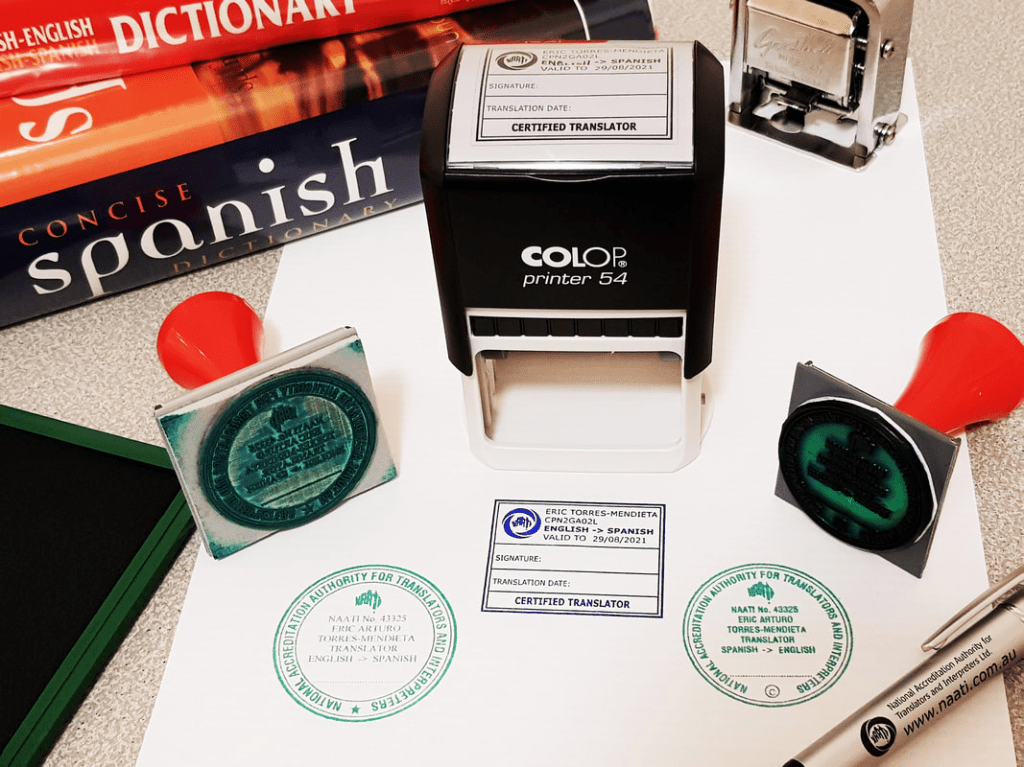
In Australia, translators certified by the National Accreditation Authority for Translators and Interpreters (NAATI) are widely recognised across government agencies.
For DAFF processes, a NAATI-credentialed translator may:
- Translate the Taiwan import permit and conditions
- Render technical veterinary terminology accurately
- Translate official stamps, seals, and annotations
- Provide a certification statement linking translation to the original
- Enable DAFF officers to verify compliance confidently
NAATI does not approve exports, but its credential signals professional competence and accountability.
Some countries, such as Taiwan, issue certificates in both the local language and English; however, because the issuing authority primarily relies on the local-language version, critical details may be omitted or inaccurately reflected in the English text, which can have serious consequences.
What DAFF Needs from Translated Documents
For examination purposes, translations should:
- Cover the entire document (no omissions)
- Preserve technical meaning precisely
- Include all numbers, dates, and identifiers exactly
- Identify the issuing authority
- Translate or describe seals and stamps
- Be clearly linked to the original document
Even minor discrepancies — such as an incorrect microchip digit — can invalidate the process.
How the System Works in Practice (Australia → Taiwan)
- Owner obtains Taiwan import permit
- Veterinary requirements are completed in Australia
- Documents (translated if necessary) are submitted to DAFF
- Government veterinarian verifies compliance
- Official export certificate is issued
- Airline transports the animal
- Taiwan authorities conduct entry inspection and quarantine procedures
ABF involvement is typically minimal unless irregularities arise.
Why Precision Matters
Failure at the documentation stage can result in serious consequences:
- Refusal of export certification
- Flight delays or cancellation
- Extended quarantine overseas
- Return of the animal to Australia
- Significant financial loss
For this reason, regulatory accuracy — including accurate translation — is as important as veterinary preparation.
Conclusion
Exporting a dog or cat from Australia is fundamentally a documentation-driven process centred on the receiving country’s requirements. DAFF acts as the certifying authority ensuring those requirements are met, while the Australian Border Force handles broader customs functions.
When destination documents are issued in a foreign language, certified translation becomes a critical bridge between legal systems. Using Taiwan as an example, the import permit and associated conditions form the backbone of the entire export certification process. A NAATI-credentialed translator can play a key role by ensuring that Australian officials fully understand those requirements and can certify compliance with confidence.
For pet owners and professionals alike, understanding this relationship between DAFF, border authorities, receiving-country rules, and certified translation is essential to a smooth and legally compliant relocation.




 BL Translations