
When a Translation Becomes Evidence in QCAT
Recently, I received several requests involving certified translations for QCAT matters. In these cases, the translated documents were intended to be used as evidence before the Queensland Civil and Administrative Tribunal.
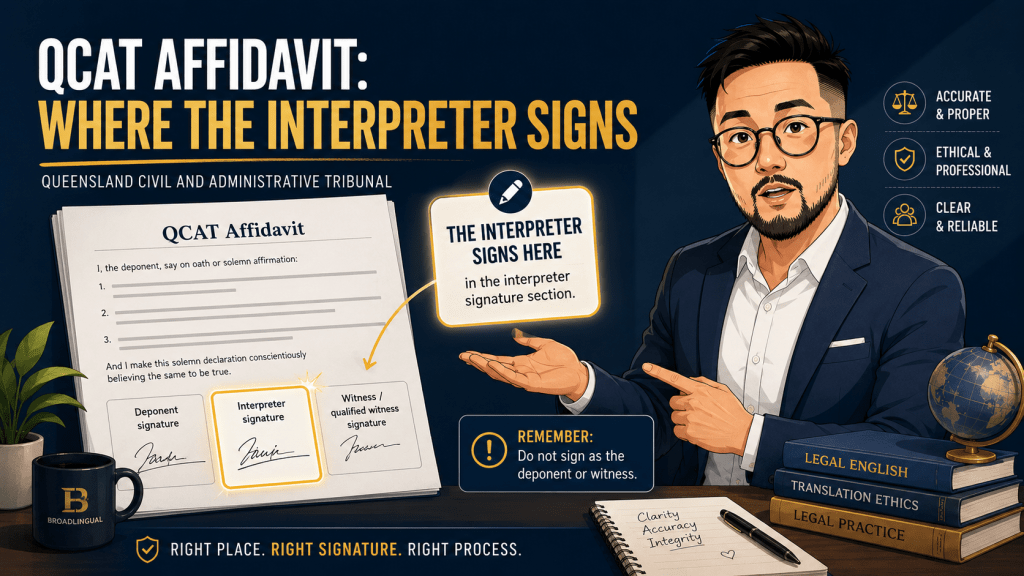
This raised a practical question: if a translator has translated a document for use in a QCAT affidavit, where should the translator sign?
At first glance, the QCAT affidavit form may look simple. However, for translators and interpreters, it can create confusion because the form is mainly designed for the applicant or respondent, not for the translator.
Why the QCAT Affidavit Form Can Be Confusing
On many court affidavit forms, especially when a lawyer is involved, there may be a clearer section or separate wording for the interpreter or translator to sign.
In QCAT matters, however, many parties are self-represented. This means the client may send the translator the affidavit form but may not know where the translator’s declaration should go.
The difficulty is this:
| Section on the Form | Why It May Not Fit the Translator |
|---|---|
| Applicant | The translator is not the applicant |
| Respondent | The translator is not the respondent |
| Deponent | The translator is not the person making the affidavit |
| Witness | The witness is usually a JP, solicitor or authorised witness |
A translator should not simply sign in the applicant, respondent, deponent or witness section if that is not their role.
What QCAT Advised
After contacting QCAT to clarify the issue, the answer was consistent with what I expected: if there is no specific translator’s section on the form, the translator may need to insert an additional translator’s declaration or certificate section.
This section should clearly state that the document has been translated to the best of the translator’s ability and knowledge. The translator should also include their NAATI credential details.
In other words, the translator’s role should be clearly identified. The translator is not representing the client, not giving legal advice, and not acting as the witness to the affidavit. The translator is simply certifying the translation.
What Should the Translator’s Section Say?
A translator’s certificate or declaration may include wording such as:
| Item | What It Should Confirm |
|---|---|
| Translator’s role | That the person is the translator |
| Scope | That the document was translated from one language into another |
| Accuracy | That the translation was completed to the best of the translator’s ability |
| Credential | NAATI certification details |
| Signature | Translator’s signature and date |
The exact wording may depend on the situation, but the key point is that the translator’s declaration should be separate from the affidavit witness section.
Important Reminder for Clients
If you are involved in a QCAT matter, such as a rental dispute, bond dispute, consumer dispute or small civil dispute, and you need to submit translated evidence, please make sure the translator signs in the correct capacity.
The translator should not sign as:
| Role | Why Not |
|---|---|
| Applicant | They are not bringing the case |
| Respondent | They are not responding to the claim |
| Deponent | They are not making the affidavit |
| Witness to the affidavit | They are not acting as the authorised witness |
Instead, the translator should sign under a separate Translator’s Certificate or Translator’s Declaration section.
Signing Should Be Done Carefully
Another practical issue is timing.
If the affidavit must be witnessed, it is usually best not to pre-sign everything too early. If the translator signs before the document is presented to the authorised witness, the witness may not accept the process, and the client may need to arrange the signing again.
The safer approach is:
| Step | Practical Action |
|---|---|
| 1 | Prepare the affidavit and translated document |
| 2 | Add a separate translator’s certificate section |
| 3 | Include the translator’s NAATI credential details |
| 4 | Inform the client that the document should be signed properly before an authorised witness where required |
| 5 | Avoid signing in the wrong section of the QCAT form |
Why This Matters
For tribunal matters, documents often need to be clear, properly presented and procedurally acceptable. A translation may be accurate, but if the translator signs in the wrong place, it may create unnecessary confusion.
For self-represented clients, this can be stressful. They may not understand the difference between a deponent, a witness and a translator. That is why it is important for translators to know their own role and explain it clearly.
Need a Certified Translation for QCAT Evidence?
If you need a document translated for a QCAT matter, including rental disputes, bond disputes, consumer matters or other civil disputes, it is important to use a translator who understands not only the language, but also the practical requirements of tribunal documents.
At Broadlingual, we prepare certified translations with clear translator certification wording and NAATI credential details, so your translated evidence can be presented in a professional and organised way.