
Category: Interpreting
-
Translator’s Declaration for QCAT Affidavits: Where Should a Translator Sign?
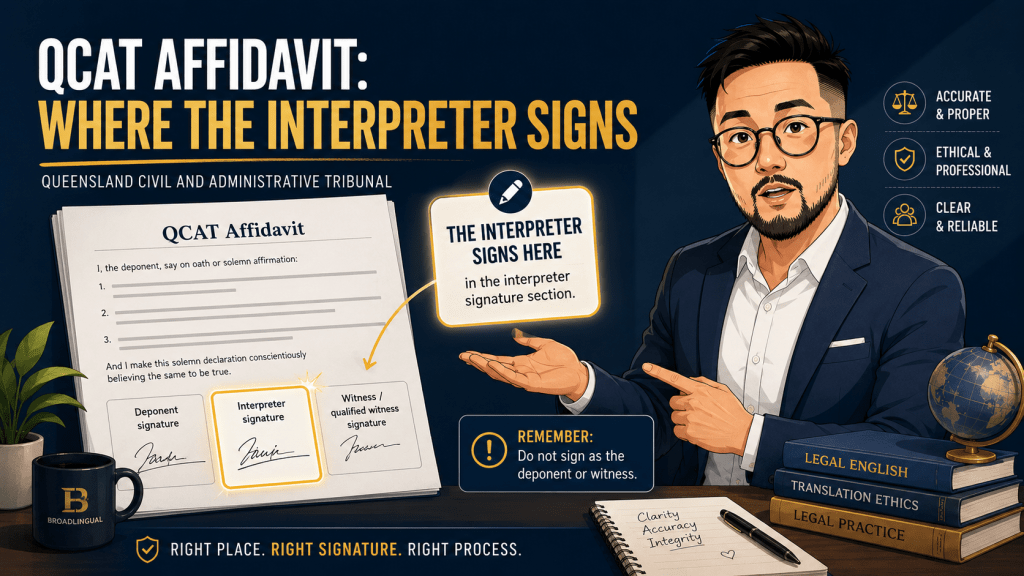
When a Translation Becomes Evidence in QCAT Recently, I received several requests involving certified translations for QCAT matters. In these cases, the translated documents were intended to be used as evidence before the Queensland Civil and Administrative Tribunal. This raised a practical question: if a translator has translated a document…
-
Working with Multiple Interpreters in Federal Court Migration Matters: Practical Lessons from the Courtroom
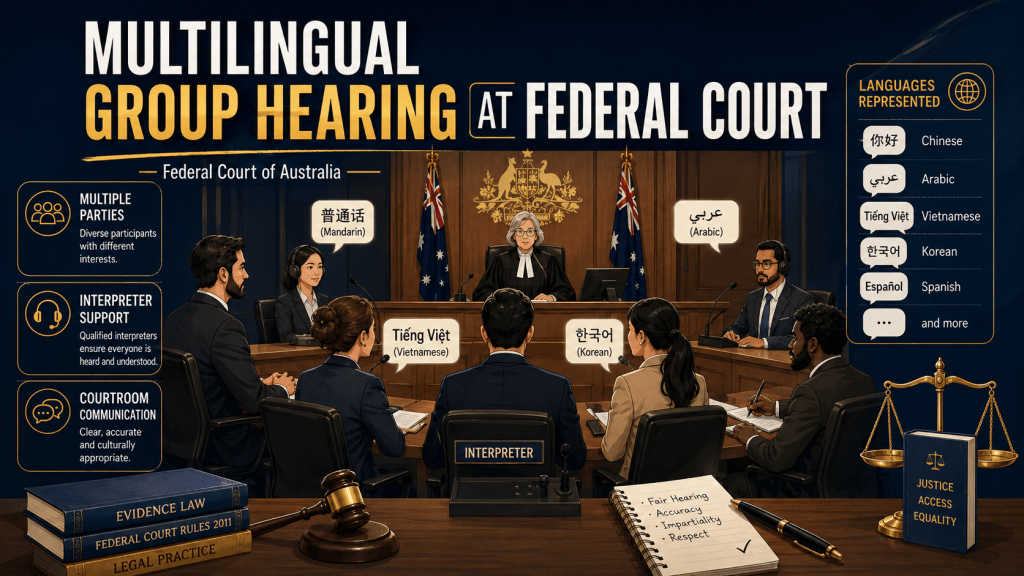
Why Court Interpreting Is a Unique but Challenging Environment Many interpreters see court interpreting as a unique professional opportunity. It places you inside a highly structured legal environment, where every word matters and where the interpreter plays an essential role in helping parties participate meaningfully in the process. At the…
-
Court Interpreting for Sentencing Hearings: Why Preparation Matters More Than Ever
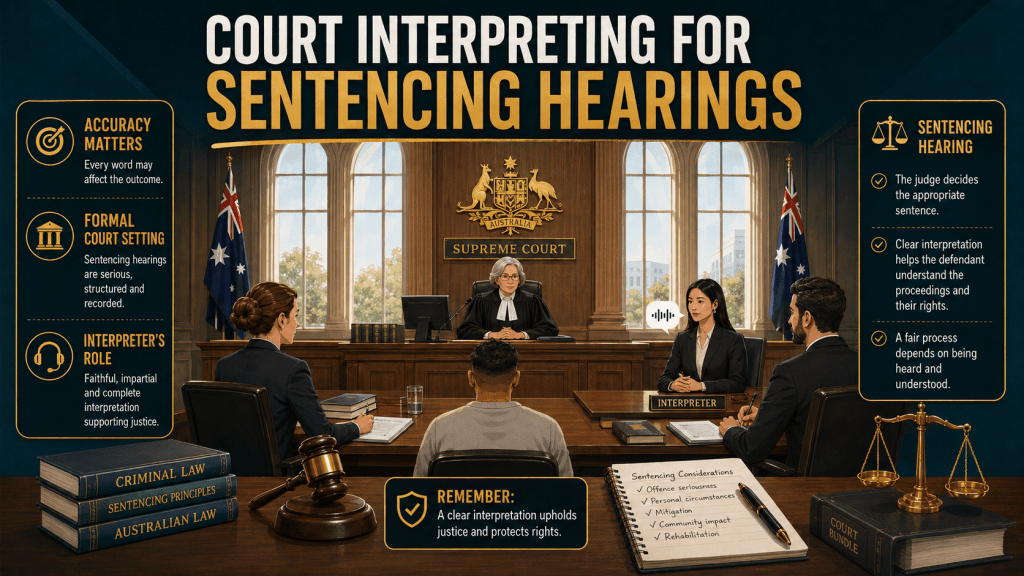
Sentencing Hearings Are Not Always Straightforward Court interpreting in a sentencing hearing can be highly demanding, especially in the District Court or Supreme Court. On paper, it may look like a single court booking. In practice, the way the hearing runs can vary significantly. Sometimes the interpreting may be mostly…
-
QCAT vs ART: What Is the Difference Between Queensland’s Tribunal and Australia’s Federal Review Tribunal?

When people hear the word “tribunal”, they may assume that all tribunals do similar work. In practice, however, different tribunals operate in different legal systems, deal with different types of disputes, and use very different language in hearings. Two names that often appear in interpreting, translation and legal-service contexts are…
-
When Tense Becomes Evidence in Criminal Proceedings
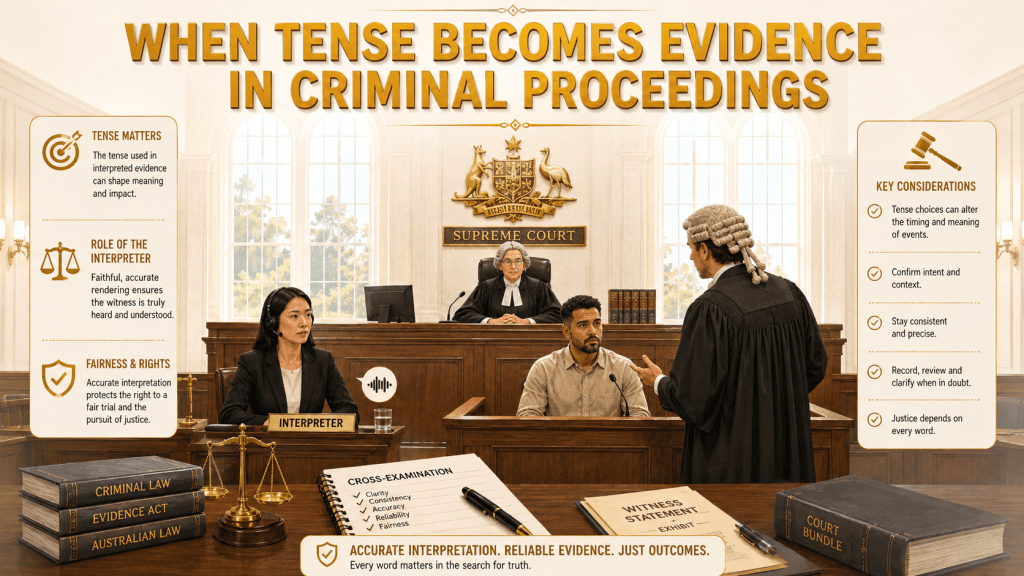
The Hidden Risk in English–Chinese Legal Interpreting Chinese does not have grammatical tense.English does. In everyday communication, this difference is manageable. In criminal court, it can be decisive. In legal interpreting, tense is not cosmetic. It can influence how a judge or jury understands: And in criminal law, those elements…
-
The “Contemplation of Marriage” Clause — The Rule That Can Void Your Will

Here’s the hidden game-changer. In Queensland: Marriage generally revokes your existing will. Yes — automatically. Unless… Your will states it was made in contemplation of marriage to a specific person. What Happens Without the Clause? ➡️ You make a will➡️ You get married➡️ Your will is revoked➡️ You die without…
-
Making a Will with the Public Trustee of Queensland — What Really Happens at Your Appointment

Most people walk into a will appointment thinking it’s simple paperwork. It’s not. In Queensland, making a valid will is a structured legal process governed by the Succession Act 1981 (Qld). Every question asked during a Public Trustee consultation has a legal purpose: to protect your estate, prevent disputes, and…
-
🇦🇺 Australian Federal Court Migration Cases: Bilingual Legal Terms Glossary

When handling migration cases in the Australian Federal Court, accurately understanding legal terminology is essential for protecting your rights. To help interpret, translate, and navigate language barriers, we have prepared this “Bilingual Glossary of Common Legal Terms in Federal Court Migration Cases”. This glossary focuses on frequently encountered hearing types,…
-
Interpreters, Affidavits, and Statutory Declarations in Australian Court & Tribunal Matters

What clients must know before engaging an interpreter An affidavit is a formal sworn document used as evidence in court or tribunal proceedings across Australia. When language barriers exist, interpreters play a crucial role — but their role is often misunderstood. Clients are frequently asked by law firms or by…
-
When Silence Speaks: Communication Duties After Delay in Migration Reviews – BYC24

The recent decision in BYC24 v Minister for Immigration and Multicultural Affairs (No 2)has drawn attention to an important procedural issue: how tribunals should approach contacting applicants after long periods of inactivity. This discussion is particularly relevant not only for migration practitioners and applicants, but also for legal interpreters working…
-
SMS Reminders and Migration Hearings: Courtesy or Legal Obligation?

In migration review matters, one question arises repeatedly: If an applicant does not receive an SMS reminder about a hearing, does that invalidate the Tribunal’s decision? Recent Federal Court migration decisions make the position clear: SMS reminders are a courtesy, not a legal requirement. The decisive issue is whether the…
-
Writ of Mandamus – What It Means in Federal Court Migration Matters

When applying to the Federal Court for judicial review of a migration decision, one common mistake applicants make is not ticking the right box on the application form. Some applicants only tick: ✔️ “An order that the decision of the Tribunal, Immigration Assessment Authority or Minister be quashed.” But they…
 Broadlingual Translation